Volvo repair
Volvo. A Culture of Innovation
We like (okay, love) our Volvos on a lot of levels. One of the big ones is that at the very core of Volvo, all the way back to Sweden, there’s a culture of innovation. Volvo has always been willing to do things the best way it could find, even when that meant being outside the norm. Quick to adopt new technology, but unafraid to keep things simple.
Safety first, and shared
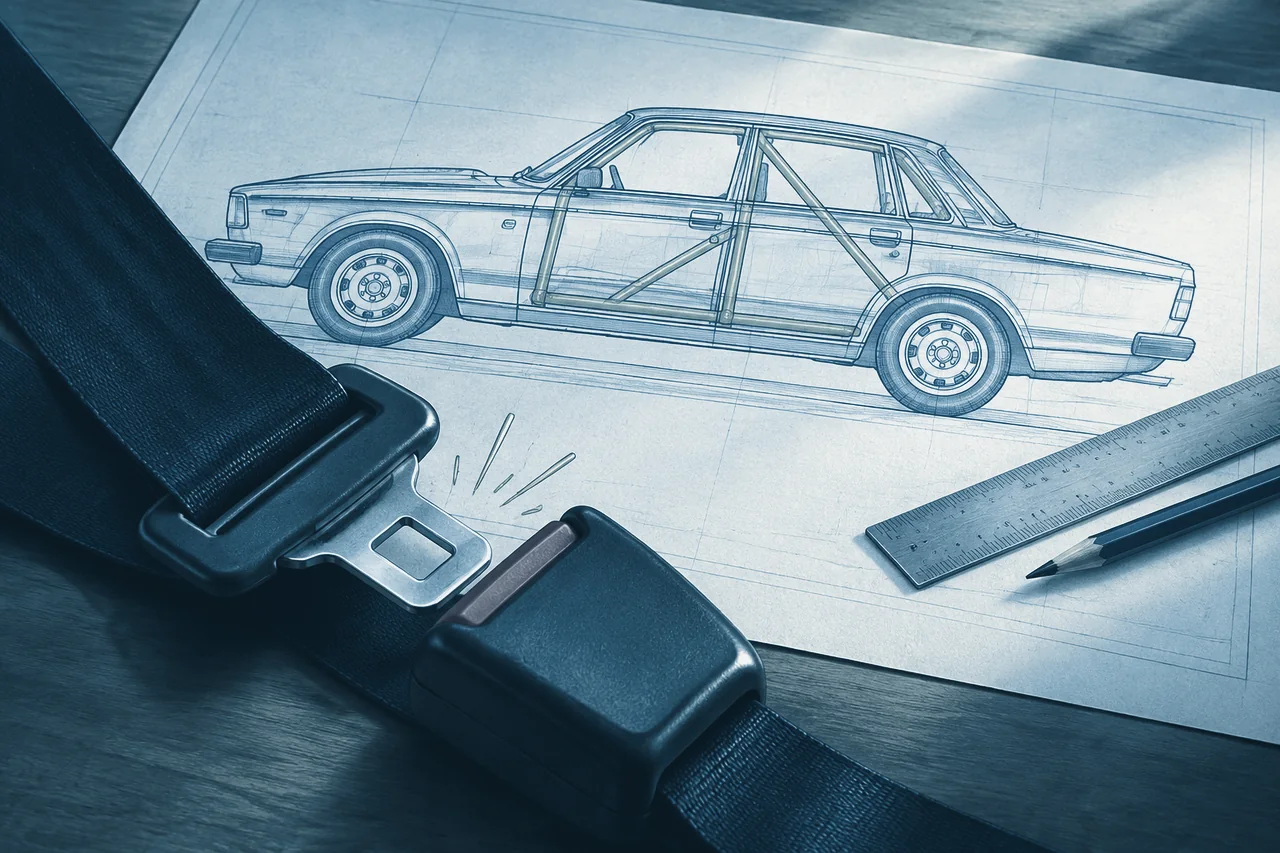
The best-known example is the three-point seat belt. Volvo engineer Nils Bohlin designed it, and it went into Volvo cars in 1959. Then Volvo did something unusual: it opened the patent so every other carmaker could use the design. That belt is in nearly every car on the road today.
The list kept growing from there:
- 1972: the rear-facing child seat
- 1976: the Lambda sond, an oxygen sensor that cut exhaust emissions dramatically and became standard across the industry
- 1991: SIPS, Volvo’s side impact protection system
- 1998: WHIPS, a seat design that protects against whiplash
- 2008: City Safety, automatic braking at low speeds
None of these were gimmicks. Each one was built to protect the people in the car, and several of them ended up changing every car, not just Volvos.
Even the factory was different
The same thinking shaped how the cars were made. When Volvo opened its Kalmar plant in Sweden in 1974, it set aside the traditional assembly line. Teams of workers built large sections of each car together, and the plant was designed around the people working in it.
It was a bold experiment. In the end it wasn’t judged lean enough to keep going, and the plant closed in the 1990s. But it says a lot about the company that it tried, and plenty of what was learned there found its way into carmaking elsewhere.
Simple where it counts
Innovation at Volvo has never meant complicated for its own sake. Sit in a 240 and you’ll see it. The seats are some of the most comfortable ever put in a car. The controls are big enough to use with gloves on. The engine bay has room to work.
That’s Scandinavian design: clean, useful and built to last.
Why it matters in our shop
We work on a P1800 in the morning and an XC60 in the afternoon, and the family resemblance is real. Both were built by people thinking hard about the person behind the wheel.
That’s what makes a Volvo more than just a car, and it’s why we’ve spent more than four decades working on nothing else. If you’d like yours looked after by people who feel that way about it, come see us.
Have a Volvo question this post didn't answer? Ask the people who work on them all day.
Ask us